
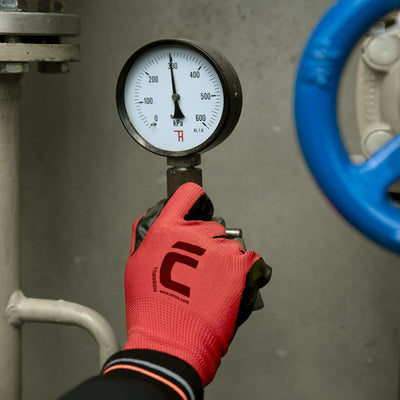




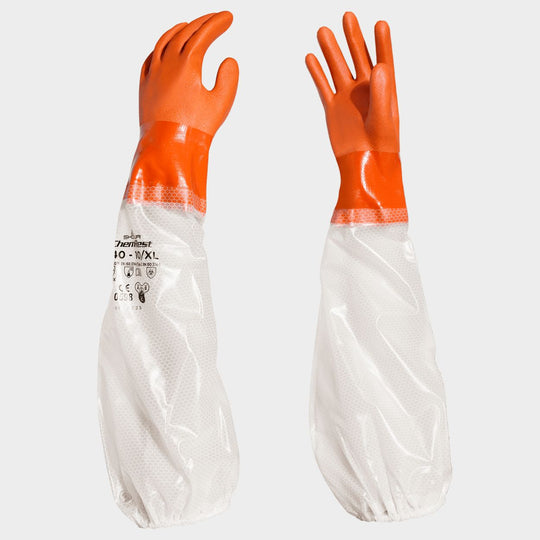

Chemical protective gloves are a key element of personal protective equipment when working with hazardous chemical substances. They are designed to protect the skin of the hands from contact with acids, bases, solvents, oils, and other aggressive substances that can cause burns, dermatitis, or serious long-term damage.
At Bultex99, you will find professional solutions selected for real working conditions – from industry and laboratories to cleaning, pharmaceuticals, and agrochemicals. Each model is designed with a focus on safety, predictable protection, and compliance with European standards.
What makes gloves truly resistant to hazardous chemicals?
To provide real protection, chemical protective gloves must act as an effective barrier between the skin and the aggressive environment. This depends not only on one factor but on a combination of physicochemical characteristics that determine their reliability.
The difference between penetration and permeability
When evaluating protective properties, it is important to clearly distinguish between two key terms that are often confused. Here is what the main concepts used in chemical protection standards mean:
-
penetration – the physical passage of a chemical through micro-defects, pores, or seams in the material;
-
permeability (permeation) – the molecular passage of a chemical substance through the material itself, without visible defects.
These two indicators are measured through laboratory tests and provide a clear idea of how long a glove can offer protection.
The role of nitrile and PVC as an effective barrier
The material is the foundation of every reliable chemical protection. In professional practice, several polymer compositions are most frequently used, each with its specific advantages.
The most common solutions include:
-
Nitrile
Nitrile work gloves provide excellent resistance to oils, greases, fuels, and many organic chemicals. They feature good mechanical strength and stable performance during prolonged contact with aggressive substances.
-
PVC (Polyvinyl Chloride)
PVC gloves are especially suitable for working with acids, bases, and water-soluble chemicals. The material allows the production of models with a long cuff, providing additional protection for the wrist and forearm.
-
Neoprene
Neoprene offers balanced protection against a wide range of chemicals, including solvents and cleaning agents. Its good flexibility at different temperatures is also an advantage.
|
Chemical / category |
Suitable material |
Example use |
|
Acids and bases |
PVC |
Laboratories, cleaning |
|
Solvents |
Neoprene |
Pharmacy, industry |
|
Fats and oils |
Nitrile |
Mechanics, agriculture |
Depending on the specific application, the right material choice significantly reduces the risk of chemical exposure and workplace accidents.
The importance of resistance to degradation
Besides the initial protection, the behavior of the material over time is crucial. Under the influence of chemicals, some polymers can:
-
harden;
-
soften;
-
crack;
-
change their color;
These processes are summarized as material degradation and lead to a sharp decrease in protective properties.

How to read the EN 374 marking to choose the right protection for you?
The marking on gloves is not a formality but a practical safety guide. The European standard EN 374 is the main reference when choosing gloves for chemical protection.
Protection types: Understanding Type A, B, and C
The EN 374 standard classifies gloves according to the number and type of chemicals they have been tested against. The differences between the types are as follows:
-
Type A
The gloves are tested against at least 6 chemicals with a breakthrough time over 30 minutes. Suitable for high-risk work and prolonged contact.
-
Type B
Provide impermeability against at least 3 chemicals with a breakthrough time over 30 minutes. They are a compromise solution for controlled environments.
-
Type C
Designed to protect against at least 1 chemical with a breakthrough time over 10 minutes. Suitable for short-term operations and lower risk.
The choice of type should be based not on the general category but on the specific chemical and working conditions.
What do the letter codes next to the pictogram mean?
Next to the chemical protection pictogram, you will find letter codes indicating the specific chemicals used in the tests.
Each code corresponds to a specific substance, such as methanol, acetone, or sulfuric acid.
This information allows quick verification of whether the glove is suitable for the actual work environment and significantly reduces the risk of wrong choice.
Additional protection against microorganisms according to EN ISO 374-5
Some chemical protection glove models also meet the EN ISO 374-5 standard, which covers protection against bacteria, fungi, and viruses.
This is especially important in laboratory, pharmaceutical, and medical environments, where chemical and biological risks often combine.

Why buy your chemical protection gloves from Bultex99?
In Bultex99 We approach chemical protection as a matter of responsibility, not compromise.
Guarantee of certified compliance with the latest European standards
All chemical protection gloves have clearly declared compliance with EN 374 and EN 388 standards. This ensures transparency, traceability, and trust with every purchase.
Strict selection of polymer compositions for reliable and predictable performance
Our assortment includes only models made from verified materials with proven performance in contact with chemicals. This guarantees stable protection and minimizes the risk of unexpected degradation.
Expert consultation for protection selection based on a specific chemical
Our team has practical experience and knowledge of standards and materials. If necessary, you can receive guidance toward the most suitable solution for your work environment.
Excellent quality-to-price ratio
At Bultex99, we strive to offer protective solutions that combine proven reliability with practical value for everyday professional use.
The choice of gloves for chemical protection should not be random. The right model reduces risk, increases safety, and provides peace of mind when working with hazardous substances.
Browse our offers and choose a solution that meets the real conditions and requirements of your activity.