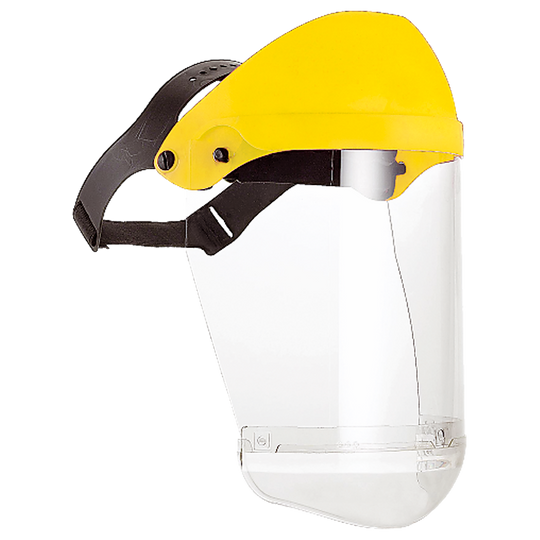
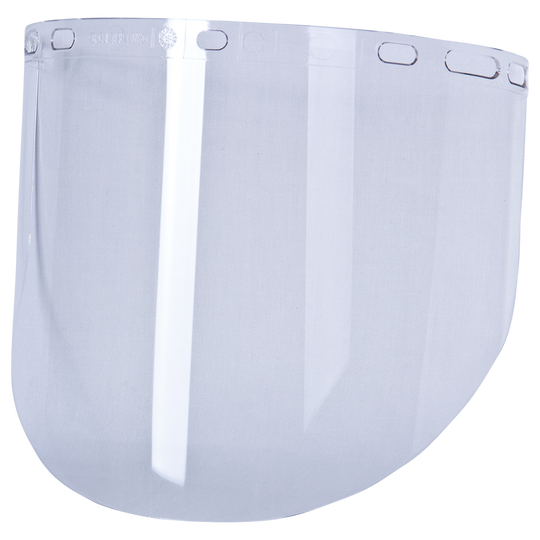
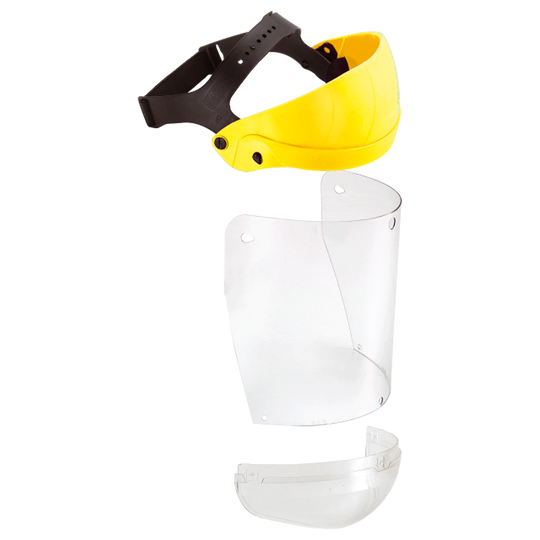
In the "Protective Shields" category, you will find professional solutions for comprehensive protection of the face and eyes when working in industrial, medical, construction, and service environments. Protective shields are a key element of personal protective equipment (PPE) when the risk exceeds the capabilities of standard safety glasses. They provide effective protection for the head, face, and vision from flying particles, mechanical impacts, liquid splashes, sparks, and other professional hazards.
As an established supplier of workwear, PPE and safety equipment, Bultex99 selects only certified protective shields that meet European standards and real working conditions. Our goal is to help you make an informed choice that guarantees health, comfort, and compliance with regulatory requirements.
What types of protective helmets are suitable for your activity?
The choice of the appropriate protective shield mainly depends on the type of risk, work environment, and required level of protection. Here is a comparative table by visor material showing the most common applications and advantages:
|
Visor material
|
Main purpose
|
Level of mechanical protection
|
Chemical resistance
|
Typical applications
|
|
Polycarbonate
|
Protection against flying particles and impacts
|
Very high (EN 166 B/1B)
|
Medium
|
Metalworking, construction, grinding
|
|
APET / Veralit (PETG)
|
Protection against splashes and contact risks
|
Medium
|
High
|
Medicine, food industry, laboratories
|
|
Metal mesh
|
Protection against large particles
|
Limited
|
None
|
Forestry, garden equipment
|
This classification shows that there is no universal solution for all activities. The correct choice of material is crucial for the effectiveness of protection and safety during work.
Full face protection against flying particles and mechanical impact
When the work environment includes high-energy particles, sparks, or risk of direct impact, the most reliable solution is protective shields with a polycarbonate visor. This type of protection is widely used in heavy industry, construction, and metalworking.
When choosing such a model, pay attention to the following features:
-
high impact resistance, certified according to EN 166 with marking B or 1B;
-
good optical clarity, allowing prolonged wear without visual fatigue;
-
possibility to combine with work helmets and other PPE.
In practice, this means higher safety when working with angle grinders, lathes, or machines with rotating parts.
Lightweight shields with APET film and Veralit for medical and everyday use
In environments where the main risk comes from liquid splashes, aerosols, or close contact, lightweight shields made of APET or Veralit (PETG) are the preferred solution. They stand out with low weight, excellent transparency, and good chemical resistance.
These models are especially suitable for:
Although their mechanical resistance is lower than that of polycarbonate, in the context of the respective activities they provide the necessary level of protection and comfort. After use, the shields can be easily cleaned and disinfected, which is key to maintaining hygiene standards.
Specialized solutions with metal mesh
When working outdoors with brush cutters, trimmers, or in forestry, the main risk is large wood particles and branches. In these cases, face shields with metal mesh are used.
They provide:
-
Excellent ventilation and no fogging;
-
Good visibility during prolonged physical work;
-
Protection against larger mechanical elements.
It is important to emphasize that this type of shield has a very specific application and is not intended for protection against liquids or fine dust. However, when used properly, they significantly increase safety and comfort during outdoor work.
Which technical characteristics guarantee reliability during work?
Besides the visor material, the technical characteristics of the face shield are crucial for real protection in daily work. They determine whether the PPE will be used correctly and consistently.
Optical class
The optical class indicates the quality of visibility through the visor. The highest standard is optical class 1, which allows prolonged wear without eye strain.
When choosing, it is important to know that:
In the long term, good optics directly affect the worker's concentration and safety.
Adjustable headband and fastening systems
Stable fit to the head is key for effective protection. Modern face shields feature adjustable headbands that allow precise fitting to different sizes.
These systems:
-
prevent slipping during movement;
-
ensure even weight distribution;
-
allow compatibility with other workwear and PPE.
After proper adjustment, the shield remains stable even during dynamic work processes.
Visor lifting capability
The visor lifting function increases practicality at work. It allows temporary face exposure without removing the entire equipment.
This is especially useful for:
-
frequent inspections and measurements;
-
short work interruptions;
-
combining with other protective equipment.
This results in a balance between protection and comfort, without compromising safety.
How to choose the right accessories and adapters?
The right accessories are an essential part of the overall head protectionThey ensure that the protective shield will be compatible with other PPE and working conditions.
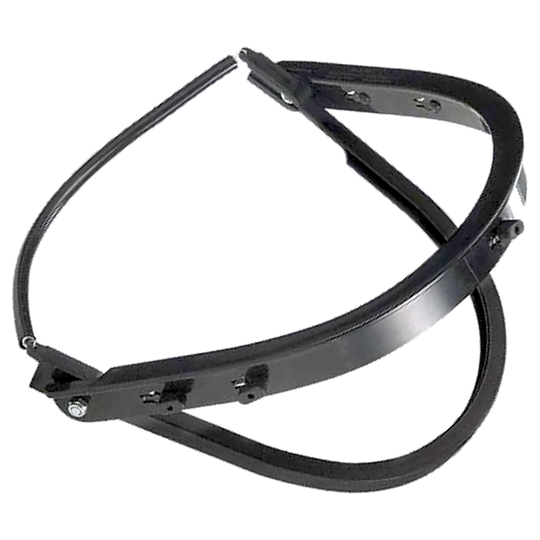
Mounting shields to work helmets using sealing systems with springs
At construction and industrial sites, simultaneous use of a protective shield and work helmetsFor this purpose, sealing systems with springs or special adapters are used.
These solutions provide stable and secure mounting and allow quick installation and removal.
A properly selected adapter ensures that the entire system works as one.
Advantages of aluminum frames and front ventilation
Aluminum frames are used in higher-end protective shields where additional strength and durability are required.
Thanks to this feature, they can offer you:
Ventilation openings reduce fogging and increase comfort during prolonged use, which directly affects compliance with safety regulations.
Compatibility with prescription glasses
For many professionals, it is important that the protective shield allows wearing prescription glasses underneath. Most modern models are designed specifically for this purpose. This way, they provide full functionality without compromising vision, as well as comfort during wear.
Why trust Bultex99's long-standing expertise when choosing protective helmets?
Choosing PPE is an investment in the health and safety of people. That is why trust in the supplier is crucial.
Many years of experience in providing certified solutions for industry and medicine
Bultex99 is a recognized partner for professional workwear, head protection, and PPE in various sectors. Our team understands real working conditions and selects products that meet them, so you can rely on us for appropriate recommendations according to your field of activity;
Uncompromising selection of materials meeting international standards
All protective shields in the Bultex99 catalog comply with European standards such as EN 166, EN 1731, and other applicable regulations. This guarantees traceability, quality, and safety.
This means you get:
-
clearly defined protective properties;
-
reliable materials with proven origin;
-
products suitable for professional use.
Choosing the right protective shield is a key element of any safety system. At bultex99.com, you will find professional online solutions that combine protection, comfort, and compliance with standards, as well as excellent value for money. Browse our selection and choose a protective shield that suits your activity and requirements.
Frequently Asked Questions
Q: Can a protective shield with metal mesh protect the eyes from liquid splashes?
A: No, shields with metal mesh are designed solely to protect against large flying particles (for example, when working with brush cutters), where maximum ventilation is needed. For protection against liquids, sprays, or fine dust, you should choose a solid visor made of polycarbonate or APET film.
Q: What is the main difference between polycarbonate visors and those made of Veralit (PETG)?
A: Polycarbonate is extremely resistant to mechanical impact (marking 1B) and is suitable for metalworking. Veralit and APET materials offer excellent chemical resistance and crystal-clear transparency, making them ideal for medical purposes, but they have lower mechanical strength against strong frontal impacts.
Q: Is a special adapter required to attach a shield to a work helmet?
A: Yes, for models that do not have their own visor, universal adapters or spring sealing systems are used to secure the visor to the helmet shell. At Bultex99, we offer components that ensure full compatibility and safety during installation.



 Work sets
(196)
Work sets
(196)
 Workwear jackets
(215)
Workwear jackets
(215)
 Softshell jackets
(64)
Softshell jackets
(64)
 Workwear trousers
(172)
Workwear trousers
(172)
 Work shorts
(37)
Work shorts
(37)
 Work T-shirts
(182)
Work T-shirts
(182)
 Work bib pants and coveralls
(94)
Work bib pants and coveralls
(94)
 Blouses and sweatshirts
(101)
Blouses and sweatshirts
(101)
 Workwear vests
(56)
Workwear vests
(56)
 Accessories
(70)
Accessories
(70)
 Waterproof clothes
(30)
Waterproof clothes
(30)
 High visibility clothes
(106)
High visibility clothes
(106)
 Clothes for aggressive environments
(12)
Clothes for aggressive environments
(12)
 Hats
(57)
Hats
(57)
 Underwear and thermal underwear
(16)
Underwear and thermal underwear
(16)