


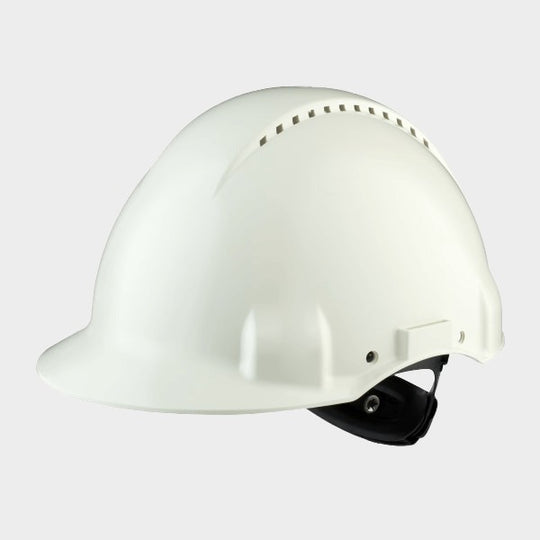
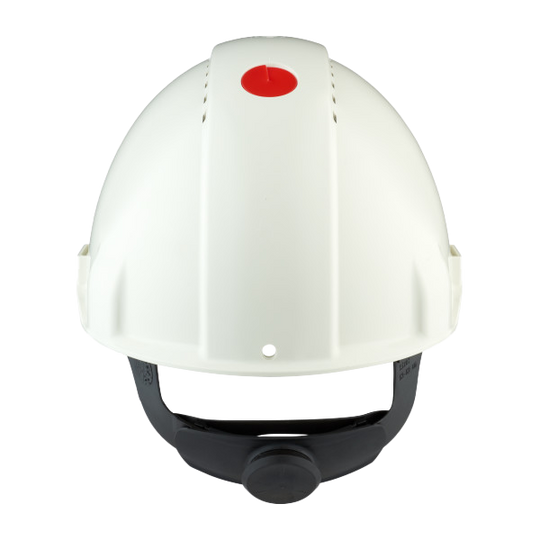


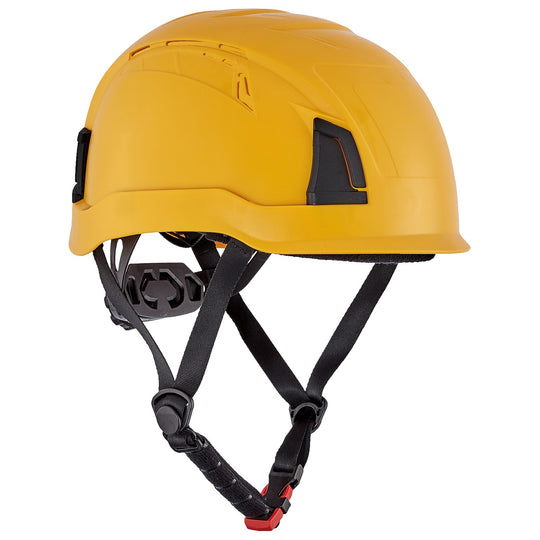

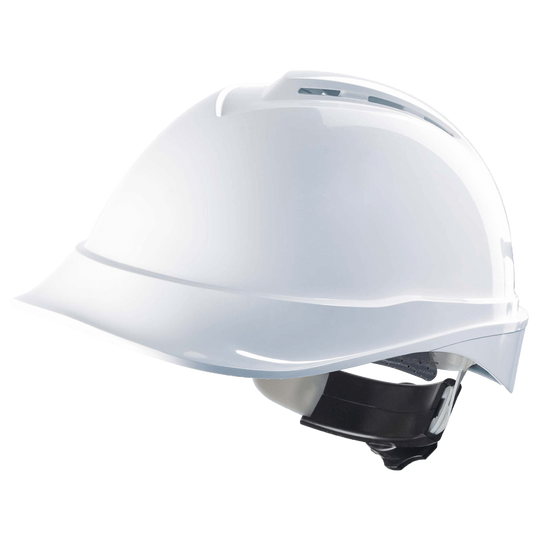
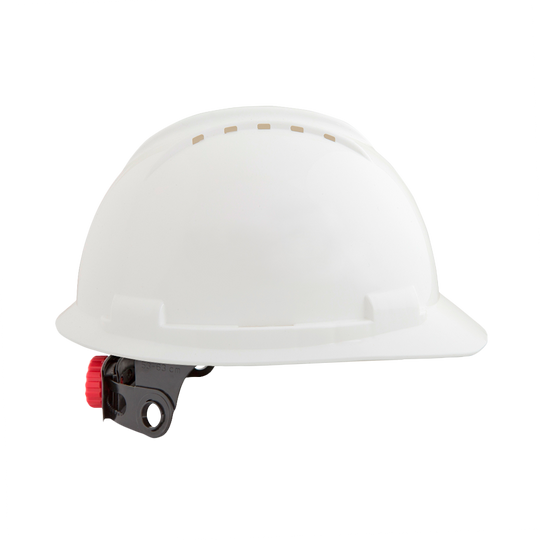
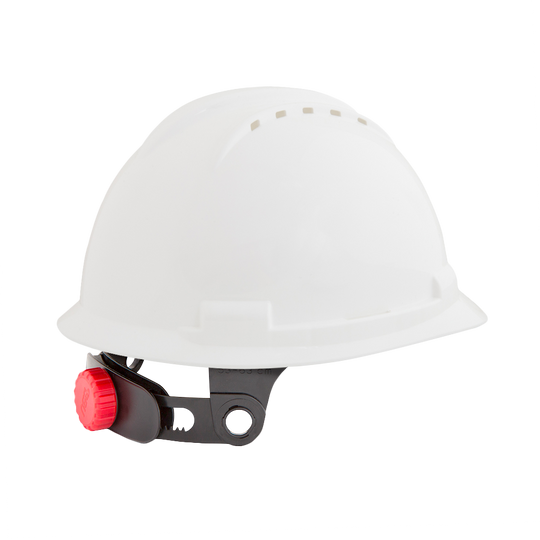
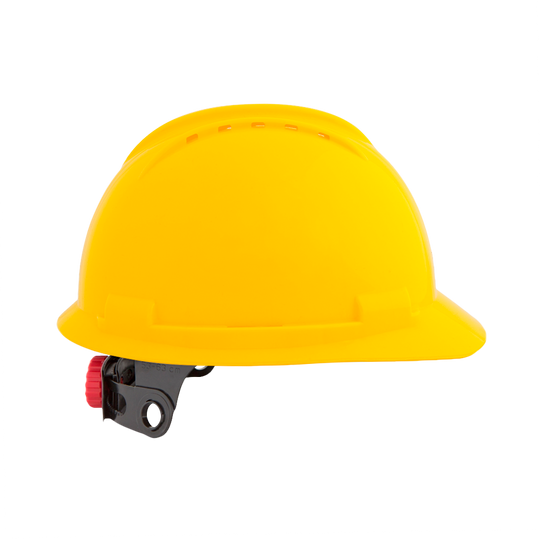
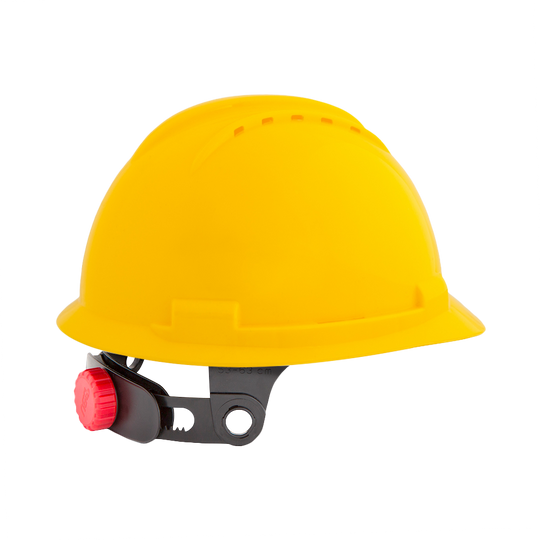
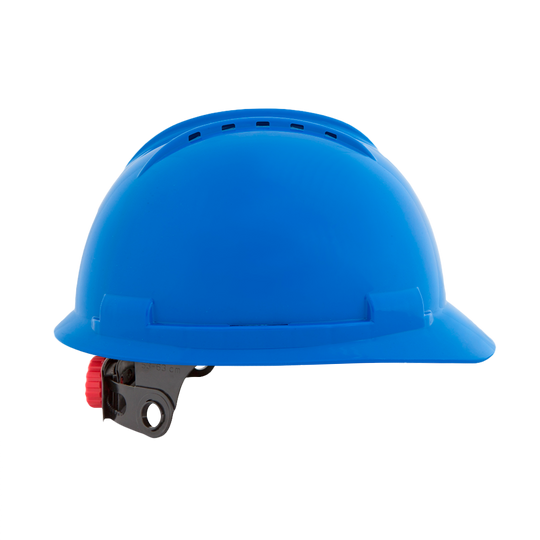
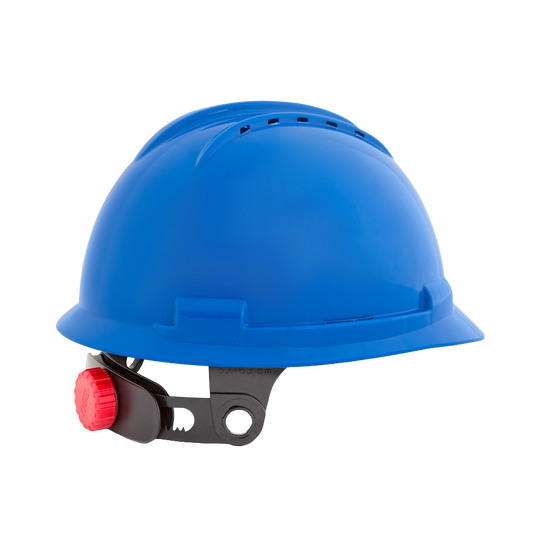
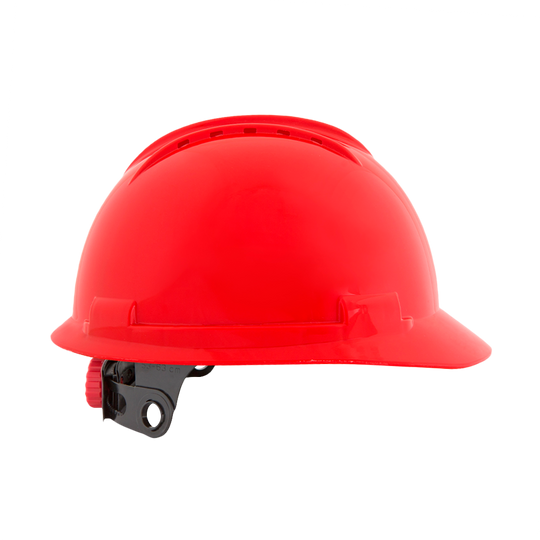
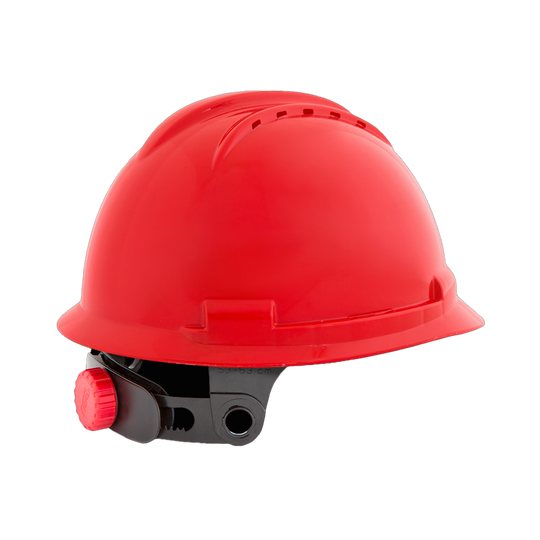
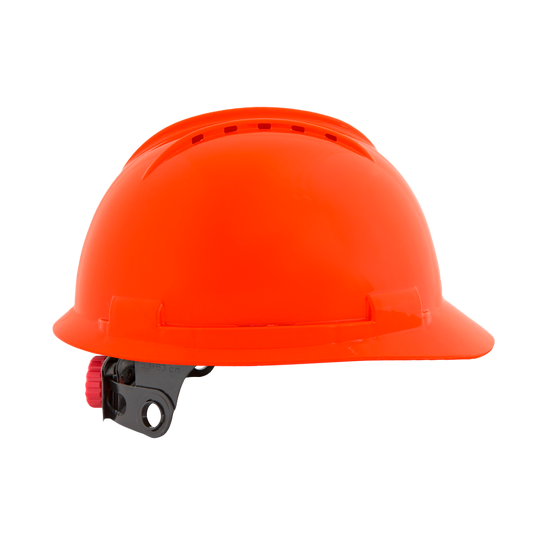
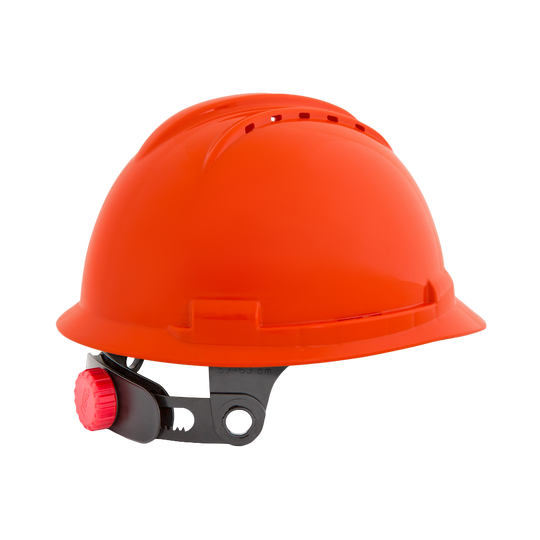
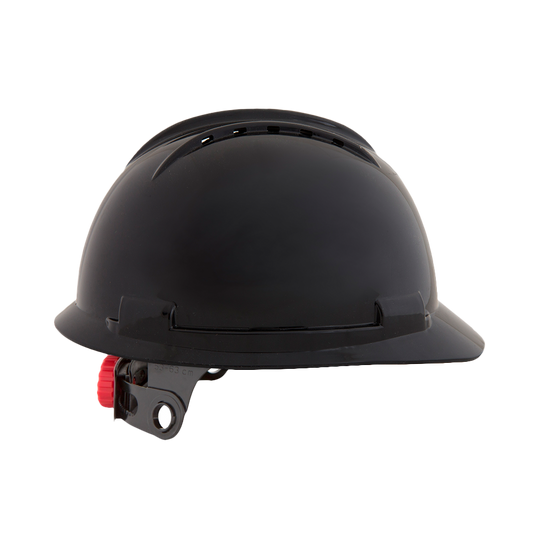
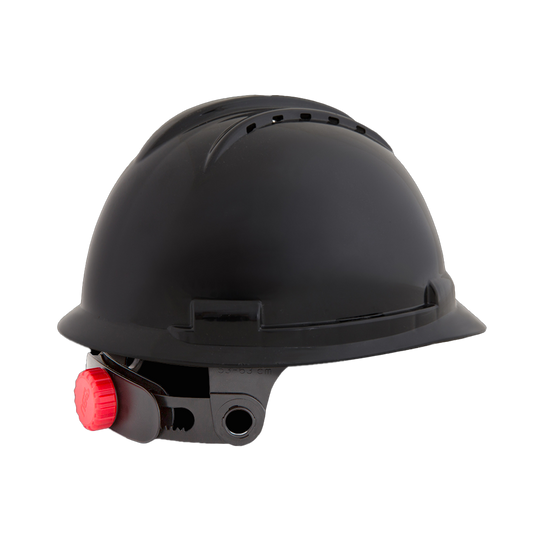


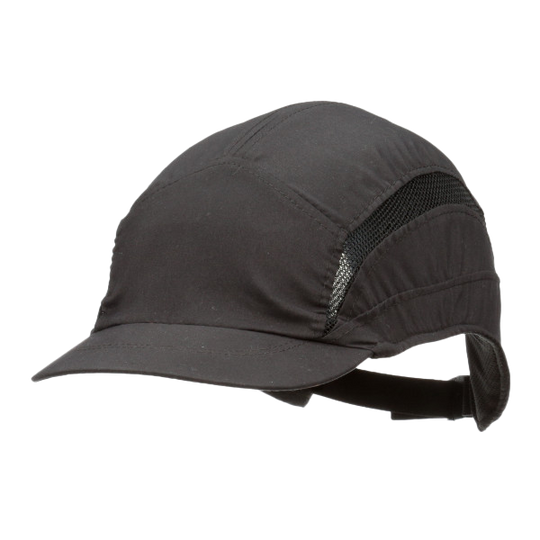


In this category, you will find professional head protection solutions tailored to the real risks in construction, industry, logistics, energy, and technical maintenance. The protective helmet is a fundamental element of personal protective equipment and it has a direct impact on the health and safety of workers. That is why its selection should never be compromised but based on standards, functionality, and comfort.
What are the key elements of a protective helmet to ensure your safety?
To effectively fulfill its protective function, every safety helmet must be designed as a system of interconnected elements. The shell, internal suspension, and additional protective features work together to minimize the risk of injury from impacts, falling objects, or contact with hazardous factors.
Shell durability: The role of ABS and polypropylene according to EN 397
The shell is the first line of defense, and its material is critically important. The most commonly used materials are ABS and polypropylene, which are approved for use in protective helmets according to EN 397 standard.
Their main advantages include:
-
high mechanical resistance to impact;
-
shape stability under temperature fluctuations;
-
good UV resistance with proper use.
These materials are selected to provide reliable head protection without unnecessarily weighing down the helmet. This results in a balance between safety and comfort, which is essential for all-day wear.
Impact dispersion
Protection is not limited to a hard shell alone. The internal suspension plays a crucial role by absorbing and distributing the energy during impact.
Effective impact dispersion is achieved through:
-
Multi-point textile or plastic suspension
It creates a distance between the head and the shell, reducing the direct transmission of force.
-
Even distribution of the load
The energy from the impact is dispersed throughout the entire structure, rather than being concentrated in one spot.
As a result, the risk of serious injuries is significantly reduced, making the helmet a truly effective protective device rather than just a formal requirement.
Protection against side deformation and UV radiation
Besides vertical impacts, there is often a risk of side impacts in the work environment. Quality protective helmets are designed to limit side deformation and maintain their structural integrity.
Additionally, the materials are stabilized against UV radiation, which:
-
slows down plastic aging;
-
preserves protective properties over time;
-
reduces the risk of microcracks during outdoor use.
This is especially important when working outdoors and during prolonged sun exposure.

How to choose the most comfortable and functional helmet for your work environment?
Besides protection, comfort is a key factor for the actual use of the helmet. Even the safest helmet won’t serve its purpose if it’s not worn properly and consistently.
Perfect fit through a smooth screw adjustment system
Modern protective helmets feature a screw adjustment system that allows quick and precise fitting according to head circumference.
This provides:
-
stability without pressure;
-
easy adjustment even with gloves;
-
secure positioning during movement.
A well-fitted helmet remains stable even when tilting or working in awkward positions, enhancing both safety and comfort.
Comfort for prolonged wear: Ventilation and soft sweat lining
During intense work and higher temperatures, comfort becomes crucial. That’s why many models offer additional solutions for temperature regulation.
The most commonly used are:
-
ventilation openings for better air circulation;
-
soft, sweat-absorbing lining;
-
ergonomically shaped inner suspension.
These elements reduce heat and moisture buildup, which helps concentration and reduces fatigue during prolonged wear.
Accessory compatibility
In many work environments, the helmet is part of a comprehensive personal protection system. Therefore, it is important that it allows integration with additional accessories.
This usually includes:
-
grooves for mounting earmuffs;
-
possibility to attach protective shields or visors;
-
compatibility with headlamps.
This flexibility allows adapting the helmet to specific working conditions without compromising protection.

Main standards for protective helmets and their application
To make an informed choice, it is important to know the differences between the main European standards. The table below summarizes the most common:
|
Standard |
Purpose |
Typical use |
|
EN 397 |
Industrial protective helmets |
Construction, manufacturing, warehouses |
|
EN 812 |
Light impact helmets |
Logistics, service activities, indoor spaces |
This information helps you quickly assess which type of helmet is suitable for your work environment and risk level.
Why buy protective helmets from Bultex99.com?
In Stenso we commit to long-term responsibility for our customers’ safety.
Uncompromising compliance with safety standards
All protective helmets in our assortment:
-
comply with applicable European standards;
-
have the necessary CE marking;
-
are intended for real professional use.
This ensures that the products are not just formally certified but truly tested for the work environment.
A reliable partner with high expertise
Bultex99 is a recognized name in workwear and personal protective equipment. Our team selects products based on:
-
practical applicability;
-
durability;
-
compatibility with other protective elements.
This way, we help you make an informed choice tailored to your specific needs.
Excellent quality at affordable prices
We believe that safety should be accessible. That’s why we offer protective helmets with an optimal balance of quality, functionality, and price, without compromising on standards.
The final choice of a protective helmet is an investment in the health and safety of people. Explore our offers and choose a reliable solution that meets the requirements of your work environment and the high standards of professional safety.