



Fire extinguishers are a fundamental element of fire protection systems designed to provide a quick and effective response in the event of a fire. They are not only mandatory equipment for every home, workplace, and public space but also a vital tool that can prevent significant material losses and save human lives. In this article,...
Fire Extinguishers: What They Are and How to Use Them?

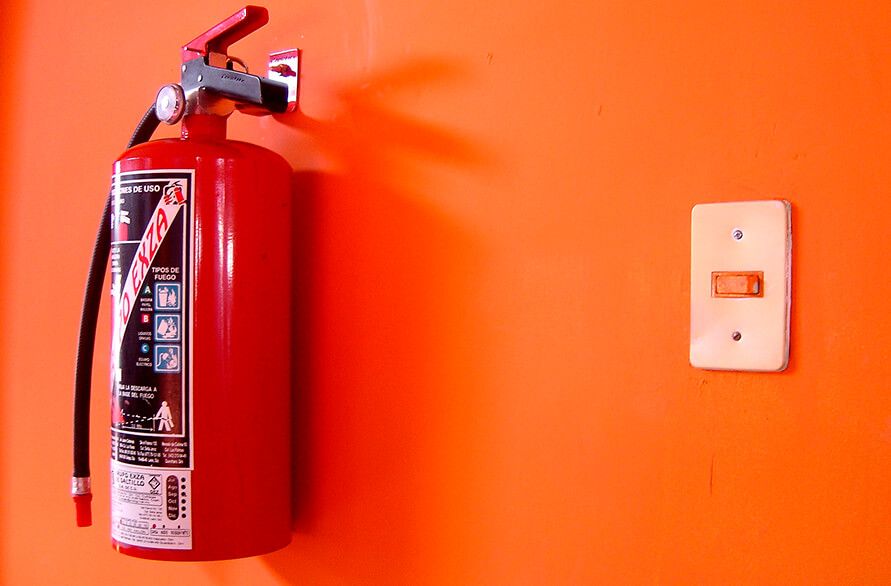
Fire extinguishers are a fundamental element of fire protection systems designed to provide a quick and effective response in the event of a fire. They are not only mandatory equipment for every home, workplace, and public space but also a vital tool that can prevent significant material losses and save human lives.
In this article, we will examine the different types of fire extinguishers, their functionality, and best practices for their use, so you are prepared in case of fire.
Basic principles of fire extinguisher operation
The basic principles of fire extinguisher operation are based on their ability to interrupt the combustion process by considering the two main factors necessary to sustain it – oxygen and fuel. By isolating the fuel from the environment or cooling the fuel to temperatures at which it can no longer sustain combustion, fire extinguishers prevent the spread of fire.
This makes them not only a mandatory component of the fire safety system in every room but also an indispensable tool for protecting life and property.
What types are available?
Fire extinguishers come in various types, with their main differences based on the extinguishing agent they use and their applicability to different fire classes. Here are the main types and their characteristics:
-
Depending on the extinguishing agent:
-
powder – require charging with a special powder or a mixture of powders, with the extinguishing agent expelled by pressurized gas, usually nitrogen. Depending on the amount of extinguishing agent, they can have capacities of 1 kg, 2 kg, 6 kg, 12 kg, 50 kg, and 100 kg. These fire extinguishers are effective for Class A fires (solid materials of organic origin), Class B fires (liquids or liquefiable solids), and Class C fires (gases);
-
with carbon dioxide – their body is filled with pressurized carbon dioxide acting as the extinguishing agent. Depending on the amount of extinguishing agent, they are available in capacities of 5 kg, 10 kg, and 30 kg. Suitable for handling fire classes B, C, and E (electrical installations);
-
water-based – use water with antifreeze additives and foaming agents. The extinguishing agent is expelled by pressurized gas. Available in capacities of 6 l and 9 l, they are most suitable for fire class A, but with foaming additives, they can also be used for classes B and F (covering cooking substances like oils and fats).
The pressure of powder and water fire extinguishers is usually around 15 bar, and those with CO2 – about 150 bar.
-
According to the method of operation:
-
portable – with a maximum weight of up to 20 kg, they are carried and operated manually. Equipped with a handle, but their operation time after activation is relatively short;
-
mobile – mounted on stands with carts for easy movement and have a longer hose. They weigh over 20 kg, making them suitable for areas requiring larger capacity and longer operation time.
Understanding the different types and their applicability is key to choosing the most appropriate one protective equipment to fight fire, depending on specific needs and conditions.
How to use them in an emergency?
Using fire extinguishers in emergencies requires knowledge and caution for effective and safe fire handling. Here are the main guidelines for proper use:
-
Selecting a fire extinguisher
Choose the most suitable type of fire extinguisher depending on the class of fire.
-
Removing the seal and safety pin
This action ensures the device is ready for operation.
-
Aiming and activation
Aim the nozzle at the base of the flames and press the trigger. For powder fire extinguishers without a pressure gauge, double pressing the trigger is necessary.
-
Avoid extinguishing against the wind
This may spread the flames instead of extinguishing them.
-
Using fire extinguishers step by step
Do not use all available devices simultaneously to avoid the risk of re-ignition.
-
Monitoring after fire extinguishing
Make sure the fire is completely extinguished and stay alert for possible re-ignitions.
-
Caution when using CO2 fire extinguishers
Avoid touching the nozzle due to the risk of frostbite.
When extinguishing fires inside a vehicle, start at the lower part of the engine compartment without opening the hood to avoid further oxidation and flame spread. Remember, the main danger is smoke inhalation, so act quickly and cautiously.
After use, the fire extinguisher must be recharged and sealed by a specialized company. Remember to regularly check its condition and suitability, storing it in a dry and easily accessible place.
Why is regular maintenance important?
Regular maintenance of fire extinguishers is especially important for their reliability and effectiveness in emergency situations. This process ensures that all components of the fire extinguisher – pressure gauges, valves, container, and extinguishing agents – are in optimal condition and ready for use.
Checking the pressure gauges helps ensure that the pressure in the container is within the required range, which is essential for the effective discharge of the extinguishing agent. On the other hand, inspecting the valves and the integrity of the container guarantees there is no risk of leakage or other damage that could compromise the device’s operation.
Assessing the suitability of extinguishing agents is key to maintaining a high level of readiness for fire response. After the inspection, an appropriate sticker is applied.
What advantages does shopping at Bultex99.com bring you?
Shopping for fire extinguishers in our online store offers a wide selection of products suitable for various needs and applications.
Also, from Bultex99 We guarantee high quality, compliance with all regulatory requirements, and access to expert consultation when choosing the most suitable fire safety equipment for your home, workplace, or office.